
Note: I am referring the original Marathi Ovi version of the Shri Sai Satcharita, beautifully translated by Mrs. Indira Kher. No copyright infringement is intended. These reflections and interpretations are drawn from my personal experience, devotion, and evolving understanding of Baba’s teachings and unceasing grace. I fully respect that others may hold different views or insights, and I welcome the diversity of devotion. However, I retain the creative and devotional agency to express myself freely on this blog, which is a heartfelt offering to my One and Only, Satchidananda Sadguru Sainath Maharaj of Shirdi.
With Love, Priyanka
Post 4.1 was about who a true saint or sage is. This one is about who a Guru is. When I started reading the Ovis for this reflection, I could not move past this particular Ovi until I had read it multiple times. There was something about it that kept drawing me back, almost as if it were triggering an inexplicable trance within me.
Jeevatma (individual soul) is the Supreme Spirit or God Himself, who brings joy to the whole world. And God is the Guru Himself, who confers happiness and weal.
Ovi 17, Chapter 4, Shri Saisatcharita (Translated by Indira Kher)
In the previous post, I mentioned that a true Guru takes us back to ourselves. In this one, I want to explore a little more about where that going back actually leads, and how the true Guru does it, who a Guru is not, and what are some dangers on the path to finding a Guru with my humble and very limited understanding. I want to be very clear that this reflection will ruffle some feathers and make some people very uneasy. If it does, that’s where your healing lies.
It is not that I have never encountered an idea like this before. Far from it. But I think this is where the magic of repetition in spiritual literature lies. We see it everywhere in Hinduism and Buddhism, particularly in texts such as the Dhammapada and the Upanishads. A teacher may repeat the same truth again and again, yet because the teacher is always speaking from the present moment, it does not necessarily emerge from the same place. Each utterance can arrive like a fresh spring of nectar. One disciple may be struck by an example, another by a phrase, another by the way a particular truth is articulated.
This is why I no longer see repetition in spiritual texts as mundane or trivial. There is an extraordinary potency in hearing the same truth until, suddenly, something in us is ready to hear it. The repetition, in these contexts, is meant to shake awake someone who has been sleeping for aeons. One of my favourite shabads, Hamra Mann Moheyo, in Ang 527 of Guru Granth Sahib Ji, beautifully expresses this enchantment of the Guru. It speaks of the Guru having enticed, enchanted and captivated the mind, body and soul.
ਸਗਲੀ ਰੈਣਿ ਸੋਈ ਅੰਧਿਆਰੀ ਗੁਰ ਕਿੰਚਤ ਕਿਰਪਾ ਜਾਗੇ ॥
Sagalee rain soiee andhiaaree, gur kinchat kirapaa jaage ||
I slept through the entire dark night of my life, but through the tiniest bit of the Guru’s Grace, I have been awakened.
I have listened to this shabad in some of the darkest periods of my life, across different cities, states and countries, like a constant companion. It has saved me more than once. This magnetising quality of the Guru, the way one becomes inexplicably drawn towards him, almost like a moth towards a flame, and eventually finds oneself consumed by the inner fire he has ignited, is one of the most striking qualities of a true Guru to me. We sleep through aeons, through lifetimes, through layers upon layers of conditioning, and then he comes with something as simple as a glance filled with mercy and grace and, somehow, we begin to wake up.
Of course, there is no shortage of people who can attract the gullible, the vulnerable and the downtrodden who are desperate for an end to their suffering and therefore susceptible to sweet words, spectacle and hocus-pocus. But it is the rare self-realised being who does not even appear to be trying to attract anyone. They enter a disciple’s life at a particular moment, and the very next moment in which a disciple becomes conscious of the Guru can feel like a moment earned through lifetimes of auspicious karma. But the true enticing is not when the Guru becomes the object of your affection, obsession, or, dare I say, parasocial behaviour or limerence. Anyone can become a screen onto which we project what we long for. This distinction is important, as is choosing a Guru carefully. If one chooses an unrealised being as a cane to lead them through darkness, it is akin to blind leading the blind.
Before moving forward, it is important to understand these two crucial concepts. Parasocial attachment is a one-sided psychological bond in which a person develops a sense of intimacy, closeness or even personal relationship with someone who does not actually participate in that relationship in the same way. It can happen with celebrities, authors, influencers, spiritual teachers or even fictional characters. In a spiritual context, it might look like believing that a (living) teacher through some mystical ability personally knows you, chose you, loves you above everyone else, is communicating specifically with you, or exists primarily to fulfil your emotional needs, even when there is little or no reciprocal relationship to support those assumptions. Limerence goes a step further into obsessive infatuation with intrusive thoughts, idealisation, intense longing for reciprocation, interpreting small gestures as signs of special significance, and an almost compulsive desire for confirmation that the bond is unique. A disciple may begin to spend more time imagining the teacher, decoding his every word, looking for signs, fantasising about closeness or constructing an elaborate inner relationship than actually doing the work the teacher points them towards.
This is where the distinction between Guru and projection becomes crucial. It can become extremely dangerous. History, including the very recent history of modern spiritual movements, has shown us how charlatans can exploit parasocial attachment, limerence and the desperate need for a saviour to accumulate power, prestige and wealth. Once a follower has elevated a teacher into an infallible figure, ordinary boundaries can begin to look like tests of faith rather than boundaries. Doubt is treated as disobedience. Questioning is stamped as spiritual failure and dependency is fostered for surrender. And then, this is exactly where abuse flourishes. Financial exploitation, manipulation, coercive control, isolation from family and community, psychological abuse, and, in some of the most horrific cases, sexual exploitation and assault within closed spiritual communities. The followers remain just as empty, sometimes even more so, while the person at the centre may be living a life of privilege built upon their projections. The more absolute the projection of divinity, the harder it can become for a disciple to recognise the human being standing underneath it, or to believe their own experience when that person violates their trust.
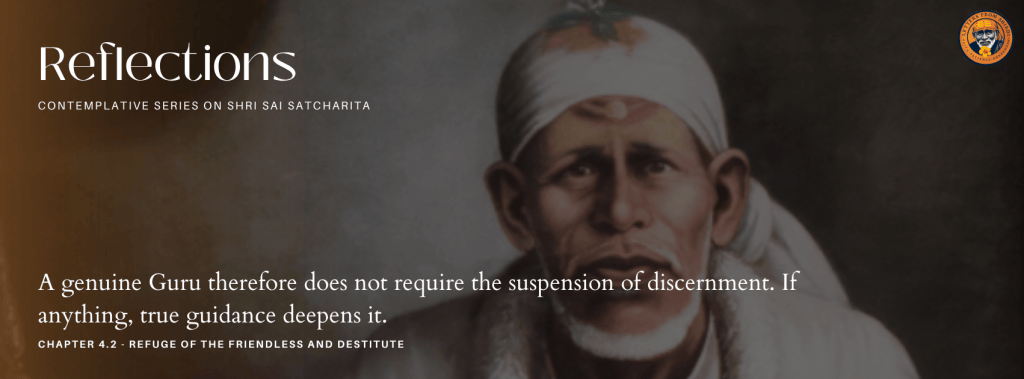
A genuine Guru therefore does not require the suspension of discernment. If anything, true guidance deepens it. It is very important to understand that surrender is not the surrender of conscience; devotion is never the abandonment of boundaries; and faith does not require us to call exploitation of any kind sacred. The Guru who asks you to become less conscious, less autonomous and less capable of questioning is asking for submission, not liberation. The danger lies in the fact that the longing to be rescued is real and very common. When someone is suffering enough, they can hand over enormous authority to the person who appears to have the answer. A charlatan posing as sole gatekeeper of Truth can exploit that longing but a true Guru uses it to return the seeker to their own inner authority.
So it is important to understand that anyone can become the object of our projection because the mind is extraordinarily creative when it encounters a void. Anyone who carries an unhealed wound or an inner lack will instinctively look for something to fill it. It may be a career, a relationship, a romantic interest, a child, marriage, money, status, beauty, academic achievement, creative recognition, social belonging, spiritual attainment, a particular lifestyle, a dream, a community, a teacher, or even the fantasy of becoming someone entirely different from who we are. The object keeps changing, but the underlying state of lack remains. We acquire the degree, then want the career. We get the career, then want recognition. We find recognition, then want intimacy. We find intimacy, then want certainty. We become spiritually inclined, then want initiation, mystical experiences, visions, powers or proximity to a Guru. The mind keeps moving the goalpost because the real hunger was never located in the object. Only our own energy can eventually fill that space. Only by turning inward can that fundamental sense of deficiency begin to dissolve.
With true grace and unfortunately, when the follower becomes even more depleted, they realise, they had been filling their emptiness with obsession. This is one reason greed is so interesting in the Buddhist understanding of dependent origination. Tṛṣṇā, craving or thirst, does not exhaust itself by being repeatedly satisfied. It perpetuates itself because satisfaction is temporary. We keep reaching for another object, another experience, another identity, another future in the hope that this one will finally make us whole, and it never does.
I had my own obsessions. I got almost everything I thought I wanted and yet none of it filled that space. All the while, Baba had been with me throughout these ten years. He has loved me with a degree of unconditionality that is, frankly, difficult to perceive, receive and even process. And yet, until relatively recently, subconscious emptiness continued to drive many of my desires. This is why words like destitute, friendless, orphaned or abandoned should not always be understood literally. There is also a visceral interiority to these states, an inner world that has become parched and is desperately waiting for rain. Sant Kabir’s image of the saint as a rain-filled cloud comes back to me here, the one who rains nectar upon everyone without discrimination. If someone is destined to awaken, even a flowing leaf in the wind can become their Guru. We see something similar in our series on Dattatreya, where almost everything that appears mundane to the ordinary eye becomes a wise teacher. The world itself becomes instruction when our consciousness is ready to receive it.
The problem begins when we sublimate all of this into another person and submit our entire inner authority to them, especially, when that person may or may not be a genuine teacher, while we project our own divinity onto them. The saviour complex can take extraordinarily deep roots because we have been fed the mythology of rescue since childhood. Someone will come. Someone will save us. Someone will recognise us, choose us, take us away from suffering and finally make everything right. But a true messiah never has to announce himself as one because he doesn’t care about it. A true Guru does not need to convince you that he is divine. His presence, teaching and way of being gradually awaken you to your own nature. He does not even have to move a finger for this to happen. He allows grace to move through you. He awakens you into yourself.
And even if you project every void, need, fantasy and longing onto him, he remains unmoved. It does not inflate him. It does not make him angry, flattered, possessive or proud that someone has placed him at the level of God. A true Guru is beyond the intoxication of being worshipped. I have to be honest, even in best of cases where the guru-disciple relationship is cosmically pure, for many devotees, the journey does begin with the dissolution of ego and surrender, and eventually one can feel almost completely subsumed and consumed by love for the Guru. Even the projection of “he has rescued me” may have its place in the beginning. Sometimes we need that hand before we are capable of walking.
There is a beautiful story from the life of Sri Ramakrishna Paramahansa that comes to mind here. When his Advaita Guru, Totapuri, was guiding him towards nirvikalpa samadhi, Ramakrishna could withdraw his mind from everything, but there remained one final obstacle he kept seeing, the radiant form of the Divine Mother, Kali, whom he loved with complete devotion. Every time he approached the formless, her form would appear before him and he would become absorbed in love and ecstasy. He simply could not pass beyond her.
Totapuri understood that even this most sacred attachment had to be transcended because Ramakrishna was now being asked to move beyond all form into the formless. When Ramakrishna told him he could not do it, Totapuri became stern. He found a sharp piece of glass, pressed it between Ramakrishna’s eyebrows and instructed him to gather his entire mind at that point and cross beyond name and form. When the form of Kali appeared again, Ramakrishna used his viveka, his discriminative wisdom, as a sword and mentally severed the form in two. The last barrier fell, and his mind soared beyond the relative plane into samadhi. He remained absorbed in that state for three days.
I find this story very relevant to the kind of Guru-disciple relationship that I am trying to explain. A lesser teacher might have been delighted to remain the object of Ramakrishna’s devotion, just as a lesser teacher might enjoy being treated as indispensable. Totapuri instead took his disciple beyond even the form he loved most deeply. And instead of becoming more dependent upon him, he pushed him towards that which existed beyond every object of dependence. This, to me, is the difference between a Guru and an object of spiritual projection as we have been discussing. The Guru may become the doorway, the beloved, the anchor and even the form through which grace first becomes tangible but eventually, he must lead you beyond the doorway. If he keeps you permanently standing before him, asking you to worship the door instead of entering what lies beyond it, something has gone wrong. The true Guru will reveal what was present before the journey began instead of culminating your spiritual prowess with him as the destination. Yet you will have to truly surrender to the Guru to gradually reveal all this to you. It is funny as much as it is paradoxical.
This surrender however isn’t passive. There is a very fine and thin line between non-doership and non-doing. Non-doership does not mean becoming inert. It does not mean refusing to act because “everything is God’s will.” It means acting without the compulsive identification of “I alone am the doer; I alone control the outcome.” Non-doing, on the other hand, can simply become avoidance cosplaying as spirituality. It is unhealthy tamas. For instance, Yoga Vashishtha talks about importance of purushartha and argues against fatalism.
A true Guru will not cultivate that dependency. His behaviour does not fundamentally change according to what you can offer him. He is equally available to the poor and the wealthy, the celebrated and the invisible. He does not need to see your bank balance, the car you drive, the clothes you wear or the size of your donation. He does not give a damn about your social currency. His sole concern is your Self-realisation. Even if that eventually means you realise that the Guru is none other than the Self, the Self is none other than Brahman, and the apparent distinction between Guru, God and disciple dissolves altogether.
A = B = C lol.
He teaches you to stand. To trust yourself. To know yourself. To dismantle the conditioning through which you have been told who you are and what you are supposed to become. He brings you back to your own body, this temple. From the head to the heart. And into chidakāśa, the inner space of consciousness, where the boundaries between self and other, inner and outer, subject and object do not exist. There is a beautiful Vajrayana idea associated with Guru Padmasambhava and the terma tradition. Teachings can remain concealed until the appropriate tertön, or treasure-revealer, appears at the right time and is able to uncover them. The teaching is present but the conditions for receiving it have not yet ripened. Through sādhanā, karmic readiness and the Guru’s grace, what was hidden becomes accessible.
I think our own deepest nature works in a similar way. We have to dive into ourselves again and again, as I keep mentioning, like someone descending into the ocean in search of a pearl-bearing oyster. You do not find the pearl by standing at the shore and intellectually describing the ocean. You have to descend. Before awakening comes suffering. Before becoming comes unbecoming. Before true learning comes unlearning. Before nectar comes poison. Before you know what you are truly aligned with, you often have to encounter everything you are not aligned with, and move through it. The same grain of sand that irritates the oyster eventually becomes the pearl. The same wounds that once hurt the healer can, after being faced and integrated, become part of the wisdom through which she heals others.
This is a tale as old as time. Guru thus becomes the anchor and harness through which we dive deeper into ourselves despite the difficulty. When you venture into the underworld of your own consciousness, you will encounter things you would rather not see like fear, shame, rage, envy, lust, grief, resentment, loneliness, helplessness, dependency, control, grandiosity, inadequacy, old fantasies, buried memories, compulsions and the parts of yourself you have spent years disguising even from yourself. You will encounter the shadow. You will encounter the abandoned inner child who still wants to be rescued. You will encounter the person who wants to be chosen. You will encounter the part that wants power, recognition, revenge or unconditional love without having to become vulnerable enough to receive it. You will encounter the grief you intellectualised, the anger you spiritualised to the T as in case of yours truly, the desire you repressed and the fear you called intuition and wasted days on.
It can be almost impossible to look at some of these things directly but once they are faced, accepted and integrated, you begin to encounter the hidden gems within your own being and right in the middle of that darkness, you find your Guru sitting there. Without body, without mind, without any of the concepts through which we ordinarily try to contain him because the Guru, in the highest sense, is beyond our notions of body, mind and soul, beyond every category through which human comprehension tries to grasp the Infinite. And there, in that same chidakāśa, you begin to see your True Self. Your true face, far more primordial, the face you carried before all these identities arose, before you entered this particular story, and before the world began telling you who you were. I recommend listening to this meditation on the same idea by Rumi.
The face you might see was present in the cosmic womb, before even the birth of Mother Earth. This journey, as adventurous as it sounds, is also extraordinarily cathartic. It can claim enough tears to create a Nile of their own. The Guru may be your benevolent guide, your projection board, your saviour, even your miracle-worker in the beginning but eventually, even miracles will become ordinary when you begin living in alignment. Reality starts responding differently because you are different. Bringing your life into alignment with what you truly are and what you are truly called towards begins to feel less like forcing reality or outcomes and more like allowing it & flowing with it. Albeit, I do not want to make this sound grander than it is. It took me ten years of tremendous pain to reach even some of these understandings, and I still have things to work through and that itself is part of the point. It does take time and courage. A LOT OF COURAGE. But it is possible and you can do it with faith and patience.
Lastly, the Guru is another “yes” for as long as we remain identified with the body and engaged in saguṇa bhakti. And when consciousness becomes ready for another jerk, another dissolution, another widening of the frame, that devotion naturally begins to move towards nirguṇa bhakti. And eventually, there is no Guru and no disciple left to speak of.
Only nirguṇa Brahman.
The one who came to awaken you was never separate from the one who was being awakened.
|| OM SAI SHRI SAI JAI JAI SAI ||
|| SHRI SATCHIDANANDA SADGURU SAINATH MAHARAJ KI JAI ||
Note: Since the chapters are long and stretch across many ovis, I will be breaking them down in a way that allows us to go deep without losing track. Each reflection will cover either a single concept, a leela, or at most 50 ovis – whichever completes a thought fully. This way, we can sit with every aspect of the Satcharita as carefully and reverently as possible, without skipping a single detail, guided always by Baba’s grace. I’ve also chosen this approach because very long posts can feel heavy or overwhelming for some devotees. Keeping them snack-able and focused will hopefully make it easier for everyone to read, return to, and reflect on in their own pace. All rights reserved.

 Letters From Shirdi
Leave a comment