
Composed by Śrī Satyajñānānanda Tīrtha Yati, This beautiful hymn glorifies the River Ganga as the supreme purifier, protector, and bestower of liberation, especially in the age of Kali. Again and again, it celebrates her boundless compassion towards even the greatest sinners and her unparalleled power to wash away the accumulated impurities of countless lifetimes. I have been enamoured by the overwhelming love of Mother Ganga at the many places in India. There is a purity in her presence that is difficult to describe but not unknown. Her love feels so certain, so unconditional, that whenever she flows beside me, I no longer feel separate from her. It is as though she makes me become her, and I begin flowing with her too.
My friend and I once made a video about Mother Ganga on our channel. Her story is as beautiful as it is sacrificial. Various Puranic traditions narrate different accounts of how she came to bear the burden of humanity’s sins. One tradition, found in the Brahma Vaivarta Purana, recounts a disagreement between Goddess Saraswati and Goddess Ganga over Vishnu, leading to mutual curses, one of which caused Ganga to descend to Earth. Another tradition, narrated in texts such as the Skanda Purana and related Puranic literature, tells how Ganga carried the divine seed of Shiva, from which Kartikeya was eventually born. Some retellings also describe tensions involving Parvati, giving rise to symbolic curses and blessings. These narratives differ across traditions, yet they all portray Ganga as willingly accepting an immense burden for the welfare of the world.
Ultimately, her sacrifice and selfless intention were recognised. Rather than being diminished by carrying the sins of humanity, she was blessed with the power to purify all who approached her with faith. Whoever came to her during life, or whose ashes were consigned to her after death, would receive the grace of purification and move closer to liberation. What an extraordinary form of Divine Mother she is! Since time immemorial she has carried out her dharma without complaint. Wherever she flows, she sanctifies not only her own banks but even the lands along her banks. She nourishes civilisations, sustains countless forms of life, and offers herself freely to everyone without distinction.
That is why it is heartbreaking to witness what we have done to her. Pollution, untreated waste, plastic, industrial discharge, and neglect have deeply scarred one of the world’s most sacred rivers. Similar images have now started emerging from Yamunotri, let alone Yamuna who has been bearing the brunt of industrialisation since decades, as do many other rivers across the country. It is shameful on the part of citizens, much more than that on the administration. Devotion today must mean more than offering flowers, lamps, and prayers. It must also mean protecting the very rivers we worship. Reverence without responsibility is an illusion.
The time for awakening has long since arrived. In many ways, we are already late. Please do your bit to protect the environment. There is no PLAN(ET)-B.
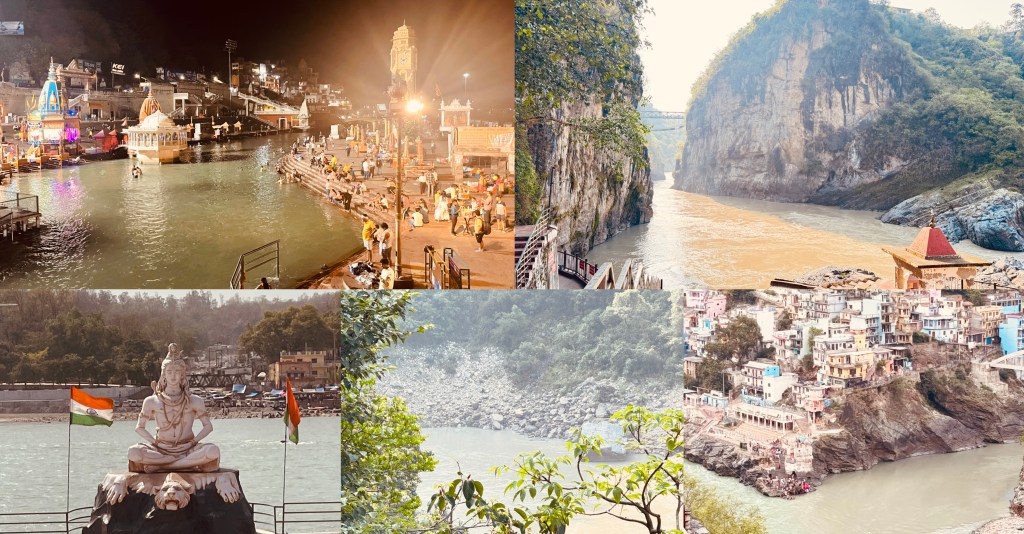
Gangashtakam – Eight verses on mother Ganga
1
यदवधि तव नीरं पातकी नैति गङ्गे।
तदवधि मलजालैर्नैव मुक्तः कलौ स्यात्।
तव जलकणिकालं पापिनां पापशुद्ध्यै,
पतितपरमदीमान् त्वं हि पासि प्रपन्नान्॥१॥
O Ganga!
Until a sinner drinks your sacred waters, there is no freedom from the accumulated impurities of the age of Kali.
Even a single drop of your water is sufficient to purify the sins of the sinful.
O supremely compassionate one, You protect the most fallen and wretched who take refuge in you.
2
तव शिवजललेशं वायुमीतं समेत्य
सपदि निरयजालं शून्यतामेति गङ्गे!।
समलगिरिसमूहाः प्रस्फुटन्ति प्रचण्डाः,
त्वयि सखि विशतां नः पापशङ्गा कुतः स्यात्?॥२॥
O Ganga!
When even the slightest trace of your auspicious waters
is carried by the wind, the countless regions of hell instantly become empty.
Sins as vast as towering mountains are shattered and destroyed.
O friend! For those who take shelter in you, what fear can there be of sin remaining?
3
तव शिवजलजालं निःसृतं यर्हि गङ्गे!
सकलभुवनजालं पूतपूतं तदाभूत्।
यमभटकलिवार्त्ता देवि! लुप्ता यमोऽपि
व्यधिकृतवरदेहाः पूर्णकामाः सकामाः॥३॥
O Ganga!
The moment your sacred waters flowed forth, the entire world became purified again and again.
O Divine Mother! The messengers of Yama had little work left to do, and even Yama himself was deprived of many destined souls, for those who received your grace, obtained blessed bodies, their desires fulfilled, and became spiritually accomplished.
4
मधुमधुवनपूगरत्नपूगैर्नृपूगैः-
र्मधुमधुवनपूगैर्देवपूगैः सुपूगैः।
पुरहरपरमाङ्गे भासि मायेव गङ्गे!
शमयसि विषतापं देवदेवस्य वन्द्ये॥४॥
Adorned with forests of blooming flowers, clusters of jewels, hosts of kings,
and multitudes of gods and excellent beings,
You shine on the supreme body of Shiiva (Purahara) like Māyā herself, O Ganga!
O worshipful one, you soothe the burning poison in the throat of the God of Gods.
- Refers to the story of Ganga descending upon Shiva’s matted locks to cool the deadly poison (halāhala) he had swallowed during the churning of the ocean.
5
चलितमभिकुलाभैरुत्तरङ्गैस्तरङ्गैः
अमितनदनदीनामङ्गसङ्गैरसङ्गैः।
विहरसि जगदण्डे खण्डयन्तौ गिरीन्द्रान्
रमयसि निजकान्तं सागरं कान्तकान्ते!॥५॥
Moving with lofty, towering waves that shimmer like a mass of brilliant light,
and the waters of countless rivers joining you, remaining untouched even while touching all, You sport and flow across the cosmic egg (universe), breaking apart even the mightiest of mountains, O Beautiful One with a  dazzling form! until you joyfully unite with your beloved, the ocean.
6
तव परमहिमानं चित्तवाचाममानं
हरिहरविधिशक्रा नापि मङ्गे! बिदन्ति।
श्रुतिकुखमभिधत्ते शङ्कितं तं गुणान्तं
गुणगणसुविलापै र्नेति नेतीति सत्यम्॥६॥
O auspicious Ganga! Even Brahma, Vishnu, Shiva, and Indra cannot fully comprehend your supreme glory, which is beyond mind and speech.
The Vedas, with hesitant praise, declare your virtues and finally conclude with “Neti, Neti” (Not this, not this) - this alone is the truth.
7
तव नुतिनतिनामान्यप्यघं पावयन्ति
ददति परमशान्तिं दिव्यभोगान् जनानाम्।
इति पतितशरण्ये! त्वां प्रसन्नोऽस्मि मात
र्ललिततरतरङ्गे चाङ्गगङ्गे प्रसीद॥७॥
Merely praising you, bowing to you (prostrations), or even uttering your holy name purifies all sins, bestows supreme peace, and grants both divine enjoyments and spiritual blessings.
Knowing this, O Refuge of the fallen! I seek Your grace and take shelter in You, O Mother;
O Beautiful Ganga of playfully dancing waves, please be pleased with me/be gracious upon me!
8
शुभतरकृतयोगाद्विश्वनाथप्रसादात्
भवहरवरविद्यां प्राप्य काश्यां हि गङ्गे।
भगवति! तव तीर नीरसारं निपीय
मुदितहृदयकुञ्जे मन्दसूनुं भजेऽहम्॥८॥
By a most auspicious stroke of destiny, and through the divine grace of Lord Vishwanath (Shiva),
Having attained the supreme knowledge that destroys the cycle of worldly existence (Samsara) in Kashi, O Ganga!
O Goddess! Drinking the absolute essence of your waters on your sacred banks,
I worship the Lord (Shiva, the vanquisher of death/slayer of Yama) within the joyful bower of my heart.
9-10
गङ्गाष्टकमिदं कृत्वा भुक्तिमुक्तिप्रदं तृणाम्।
सत्यज्ञानानन्दतीर्थयतिना स्वर्पितं शिवे॥९॥
तेन प्रीणातु भगवान् शिवो गङ्गाधरो विभुः।
करोतु शङ्करः काश्यां जनानां सन्ततं शिवम्॥१०॥
This Gangashtakam,
which bestows both worldly prosperity and liberation,
is offered to Shiva by Satyajñānānanda Tīrtha Yati.
May Lord Shiva, the bearer of Ganga, be pleased by this.
May Shankara always bestow auspiciousness upon all people in Kashi.
Closing
इति सत्यज्ञानानन्दतीर्थयतिना विरचितं गङ्गाष्टकं सम्पूर्णम्।
Thus ends the Gangashtakam composed by Satyajnanananda Teertha.
|| OM SAI SHRI SAI JAI JAI SAI ||
|| SHRI SATCHIDANANDA SADGURU SAINATH MAHARAJ KI JAI ||
Note: These verses are part of the Kāvyasaṅgraha, a nineteenth-century Sanskrit poetry collection preserved in archival records of GoI. It brings together subhāṣitas, hymns, and reflective poems that explore life, conduct, desire, devotion, and inner clarity. I don’t necessarily resonate with every view expressed in these texts, especially some social attitudes of their time, including those that speak about women in ways I don’t agree with. I share them not as beliefs to be adopted, but as thoughtful voices from another age, many of which still carry insight worth reflecting on. The translations are my own, done with care and respect for the originals. Mistakes are possible, and I welcome corrections or alternative readings if necessary and share them in the hope that whatever wisdom they carry may reach those who find value in it.
 Letters From Shirdi
Leave a comment