
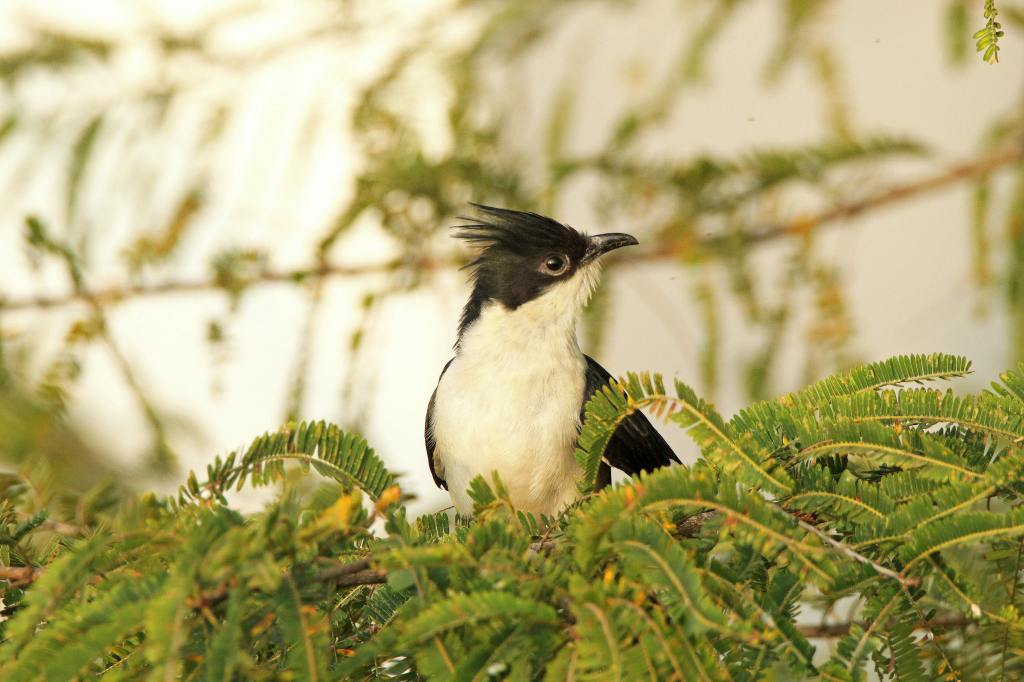
This exquisite companion poem to the Pūrvacātakāṣṭakam (often attributed to Bilvamaṅgala Thākura, the author of Kṛṣṇa-karṇāmṛta, continues the allegory of the noble chātaka bird, symbolising the soul’s unwavering, exclusive devotion to the Divine, here personified as the rain-cloud, an image of God’s grace. The bird rejects all inferior sources of water and endures thirst, delay, or abundance with equanimity, accepting only pure rain from the chosen cloud. Each verse speaks of resolute surrender, patient longing, and profound spiritual dignity.
1
स्वच्छाः सौम्यजलाशयाः प्रतिदिनं ते सन्तु मा सन्तु वा।
स्वल्प वा बहुधा जतं जलधर! त्वं देहि मा देहि वा॥१॥
Let there be clear, pleasant reservoirs every day or let there not be.
Give little or give abundantly, O cloud! or give nothing at all.
- The chātaka declares complete indifference to worldly alternatives and to the quantity (or even presence) of grace. Its sole focus is the chosen source, symbolising total detachment from substitutes and perfect equanimity toward divine will. This is the stage we reach once we do impartial surrender which Baba asks of us all. When we do not surrender to get what we want but for what He wants to give us and are resolute that we will not move away from Him in any condition whatsoever, whether or not our wishes are fulfilled and even if we can’t see His grace with naked eyes because we know it is there regardless.
2
कासारेषु सरित्सु सिन्धुषु तथा नीचेषु नीरग्रहं
धिक् तत्रापि शिरोनतिः किमपरं हेयं भवेत् मानिनाम्।
इत्यालोच्य विमुच्य चातकयुवा तेषु स्पृहामान्दराद्-
उद्ग्रीस्तव वारिवाह ! कुरुते धाराधरालोकनम्॥२॥
Fie on drinking water from ponds, rivers, oceans, or any low sources!
And fie even more on bowing one’s head for it, what could be more degrading for the proud?
Thus reflecting, the young chātaka slowly releases all desire for those
and, throat uplifted, O cloud-bearer of waters! gazes intently only at you.
- The bird consciously rejects other sources (symbolising worldly pleasures) as beneath its dignity. Even the act of humbly begging from the world is shameful. It chooses proud, upward gaze toward the sole worthy source. It also represents, I believe, not changing your Guru/deity if you are not getting what you want and holding onto Him/Her come what may.
3
के वा न सन्ति भुवि तामरसावतंसा
हंसावलीबलयिनो जलसन्निवेशाः।
किं चातकः फलमवेक्ष्य सवच्चपातां
पौरन्दरींमुपगतो नववारिधाराम्॥३॥
Are there not many water-bodies on earth adorned with lotuses
and encircled by flocks of swans?
Yet the chātaka, considering the outcome, has approached
Indra’s consort (the fresh rain-cloud) for new streams of water.
- Many attractive alternatives exist (beautiful lakes = worldly allurements), but the wise chātaka foresees their ultimate unsatisfactoriness and chooses the pure, heavenly rain (divine grace personified as Indra’s cloud).
4
रै धाराधर! धीरनीरनिकरैरेषा रसा नीरसा
शेषा पूषज्ञरोत्करैरत्निखरैरापूरि भूरि त्वया।
एकान्तेन भवन्तमन्तरगतं स्वान्तेन सञ्चिन्तयन्
आश्चर्य्यं परिपीडितोऽभिरमते यत् चातकस्तृष्णया॥४॥
O cloud-bearer! This earth is sometimes made flavourful by your calm streams,
sometimes filled abundantly with torrents of hail and fierce thunder.
Yet, contemplating you alone within its heart,
it is a wonder that the chātaka, though sorely afflicted, still delights in its thirst.
- The cloud’s grace is unpredictable, gentle or stormy, yet the chātaka meditates single-pointedly on it and finds joy even in suffering thirst, seeing it as part of devotion. It reminds me of Baba’s words when He said that a mother gives bitter medicine to the child for his own benefit, just like He gives challenges and tests for our spiritual evolution.
5
आमानमम्भोनिधिरेतु शीषं
ब्रह्माण्डमासिञ्चतु वा तरङ्गैः।
नास्ति क्षतिर्नोपचितिः कदापि
पयोदवृत्तेः खलु चातकस्य॥५॥
Let the ocean of clouds rise to the head (flood everything)
or let it sprinkle waves over the entire universe.
For the chātaka, there is never loss nor gain
from the ways of the cloud.
- Extreme equanimity: deluge or minimal rain, neither harms nor overly benefits the chātaka, whose fulfilment lies in surrender, not in outcome.
6
पयोद हे! वारि ददासि वा न वा
त्वदेकचित्तः पुनरेष चातकः।
वरं महत्या म्रियते पिपासया
तथापि नान्यस्य करोत्युपासनाम्॥६॥
O cloud! whether you give water or not,
this chātaka remains single-mindedly devoted to you alone.
Better to die of intense thirst
than to worship any other.
- Ultimate declaration of exclusive devotion (ananya-bhakti): death is preferable to compromise. The chātaka would rather perish than accept grace from another source. Baba’s 11th vow to devotees as per traditional folklore which says: धन्य धन्य वह भक्त अनन्य मेरी शरण तज जिसे न अन्य! (Dhanya dhanya vah bhakta ananya, Meri sharan taj jise na anya) is exactly this. “How fortunate, how truly fortunate is the devotee who is wholly dedicated, who leaves My protection for no other.” More than moving onto others, this vow is about single pointed devotion and unwavering faith on your Guru, knowing fully well that Guru is God and knows the best for you. Or if one is devoted to a deity, the mind should be focused on them one-pointedly.
7
यद्यपि चातकपक्षी क्षपयति जलधरमकालवेलायाम्।
तदपि न कुप्यति जलदो गतिरिह नान्यां यतस्तस्य॥७॥
Even though the chātaka bird troubles the cloud at an untimely hour,
the cloud does not become angry,
because the bird has no other refuge here.
- The Divine is infinitely patient and forgiving toward the sincere devotee who beseeches/begs persistently, knowing there is no alternative shelter. This reminds me of chapter 50 in which, Tembe Swami ji entrusted a coconut for Baba, whom he addressed as “my brother, Sai” to Pundalikrao of Nanded, who ended up using it to soften the chivda while travelling and later Baba asked for it Himself (wireless network between saints you see – telepathy), then did not accept another coconut offered as substitute saying, “value of that coconut (which swamiji sent) was way more than any other” but later when Rao was dejected, He asked Him to drop doer-ship and forgave Him. Oh how kind is my mother, Sai. She knows how guilt, pessimism, shame and other emotions bind one evermore to their ego, and take the devotee away from realisation that She (Brahman) alone is the doer, and we are Her in our perfect state, without any self-cherishing or self-grasping tendencies.
8
एक एव खगमणिश्चिरं जीवतु चातकः।
पिपासया वा म्रियते याचते वा पुरन्दरम्॥८॥
Let the chātaka alone among birds live long,
the jewel of birds!
It either dies of thirst
or keeps begging Indra (the cloud-lord).
- The chātaka is the supreme bird (khagamaṇi) for its noble exclusivity. Its only options are patient waiting unto death or persistent plea to the Divine, no third path.
इति उत्तर चातकाष्टकं समाप्तम्।
Thus ends the Uttaracātakāṣṭakam.
Together with its predecessor, this pair of aṣṭakams forms a masterpiece of bhakti literature, portraying the ideal of absolute surrender, dignity in longing, and rejection of all but the Highest. The chātaka remains an enduring symbol in Indian spirituality for the soul that seeks only God’s direct grace.
|| OM SAI SHRI SAI JAI JAI SAI ||
|| SHRI SATCHIDANANDA SADGURU SAINATH MAHARAJ KI JAI ||
Note: These verses are part of the Kāvyasaṅgraha, a nineteenth-century Sanskrit poetry collection preserved in archival records of GoI. It brings together subhāṣitas, hymns, and reflective poems that explore life, conduct, desire, devotion, and inner clarity. I don’t necessarily resonate with every view expressed in these texts, especially some social attitudes of their time, including those that speak about women in ways I don’t agree with. I share them not as beliefs to be adopted, but as thoughtful voices from another age, many of which still carry insight worth reflecting on. The translations are my own, done with care and respect for the originals. Mistakes are possible, and I welcome corrections or alternative readings if necessary and share them in the hope that whatever wisdom they carry may reach those who find value in it.

 Letters From Shirdi
Leave a comment