
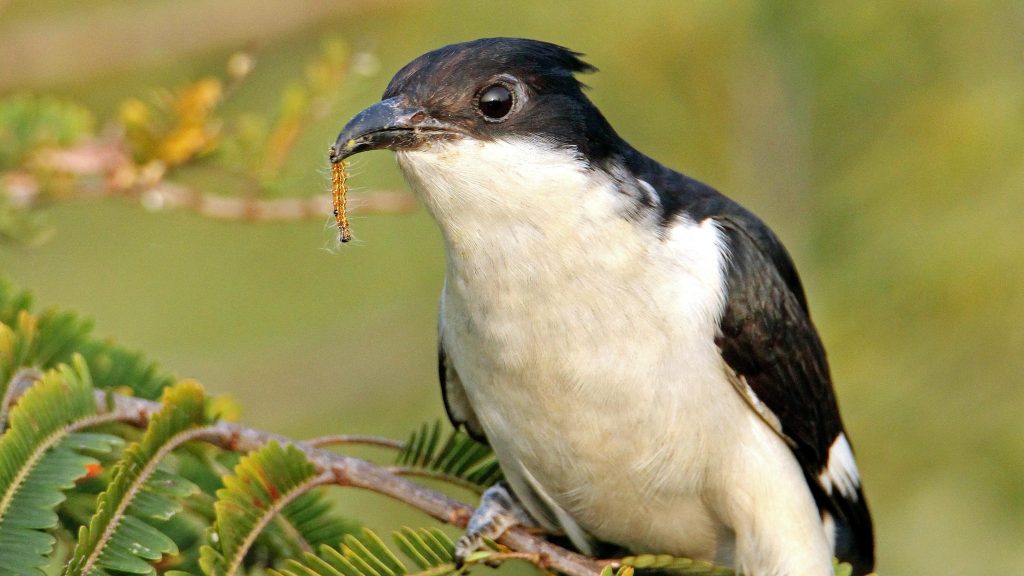
This beautiful set of eight verses uses the legendary chātaka bird, often identified with the pied cuckoo or Jacobin cuckoo as a profound symbol of unwavering faith, patient longing, and noble exclusivity. According to tradition, the chātaka never drinks water from the earth, neither from rivers, lakes, ponds, nor even rainwater collected on the ground, but waits with open beak toward the sky for fresh raindrops directly from the clouds. The poem portrays the bird’s desperate yet dignified plea to the rain-cloud (jaladhara or megha), evoking themes of devotion, integrity, and spiritual aspiration for e.g., the soul’s exclusive longing for divine grace. Though the author is not known, but in the classical devotional tradition, these verses elevate the chātaka to an ideal of spiritual nobility, for accepting suffering rather than compromise. It inspires bhakti and vairāgya, often interpreted allegorically as the devotee’s relationship with God. The later companion piece, Uttaracātakāṣṭakam, is sometimes attributed to Bilvamaṅgala.
1
वातैर्विधूनय बिभीषय भीमनादैः
सञ्चूर्णय त्वमथवा करकाभिघातैः।
त्वद्वारिविन्दुपरिपालितजीवितस्य
नान्यागतिभवति वारिद! चातकस्य॥१॥
Shake me with your winds, terrify me with your fearful thunder,
or even shatter me with blows of hailstones,
yet, O cloud! for the chātaka whose life is sustained solely by your raindrops,
there is no other refuge.
- The bird boldly invites the cloud’s fury rather than compromise its vow. It declares absolute dependence on pure rain from the cloud alone, symbolising unswerving devotion that accepts hardship over impurity.
2
चातकस्त्रिचतुरान् पयःकणान्
याचते जलधरं पिपासितः।
सोऽपि पूरयति भूयसाम्भसा
चित्रमत्र महतामुदारता॥२॥
Thirst-tormented, the chātaka begs the cloud for just three or four drops of water.
Yet the cloud fills it with abundant rain,
how wonderful is the magnanimity of the great!
- The bird asks for the bare minimum, but the noble cloud gives generously. God responds with overwhelming grace to sincere, modest longing.
3
शक्यते येन केनापि जीवनेनैव जीवितुम्
किन्तु कौलव्रतोङ्भङ्गप्रसङ्गः परदुःसहः॥३॥
One can certainly survive by any means whatsoever,
but for a being of hereditary vow, the very prospect of breaking that vow is utterly unbearable.
- Survival is easy with compromises, but for the chātaka (and the noble soul), violating an ancestral or self-imposed principle is worse than death, emphasising integrity and satya-saṅkalpa. Prān jaye par vaċana na jaye.
4
गर्जसि मेघ! न यच्छसि तोयं
चातकपक्षी व्याकुलितोऽहम्।
दैवादिह यदि दक्षिणवातः
क्व त्वं क्वाहं क च जलपातः॥४॥
You thunder, O cloud, but give no water,
I, the chātaka bird, am distraught!
If by fate a southern wind blows here,
where will you be, where will I be, and where the rainfall?
- The bird’s anguish at empty promises. The southern wind (associated with monsoon) could scatter everything, highlighting the pain of delayed grace and the uncertainty of divine timing. Yet, observe how his faith doesn’t waver. Aren’t we all the birds for Baba, anyway?
5
वापी स्वल्पलाभयो विषमयो नीचापगाहो ह्रदः
क्षुद्रात् क्षुद्रतरो महाजलनिधिर्गण्डूषमेकं मुनेः।
गङ्गाद्याः सरितः पयोनिधिगताः सन्त्यज्य तस्मादिमान्
सम्मानी खलु चातको जलमुचामुच्चैः पयो वान्छति॥५॥
A well yields little; a tank is uneven; a low river is impure; a lake is deep;
the vast ocean is even smaller (salty and undrinkable); a sage needs only a mouthful.
Rejecting all these, rivers like the Ganges that flow into the sea,
the noble chātaka desires only the pure, elevated rain from the clouds.
- Hierarchy of water sources, all rejected as inferior or contaminated. The chātaka’s exclusivity mirrors the seeker’s rejection of worldly or impure pleasures for the highest divine sustenance. Haven’t you observed how when you experience Baba’s love once through his categorical ways – dreams, miracles, coincidences, psychic abilities – you long for nothing else but that grace, over and over again. All else feels secondary after that.
6
वीजैरङ्कुरितं नदीभिरुदितं वल्मभिरुज्जृम्भितं
वृक्षैः पल्लवितं जनैश्च मुदितं धाराधरे वर्षति।
भ्रातंश्चातक! पातकं किमपि ते सम्यङ् न जानीमहे
यन्तेऽस्मिन् न पतन्ति चञ्चुपुटके द्वित्राः पयोविन्दवः॥६॥
Seeds sprout, rivers swell, ants emerge,
trees burst into leaf, and people rejoice when the cloud-bearer rains.
O brother chātaka! We truly cannot understand what sin you have committed,
that even two or three drops do not fall into your open beak during this downpour.
- All creation benefits from the rain except the suffering chātaka, poignant irony questioning past karma while underscoring patient endurance amid apparent injustice.
7
नदेभ्योऽपि ह्रदेभ्योऽपि पिबन्त्यन्ये सदा पयः।
चातकस्य तु जीमूत! भवानेवावलम्बनम्॥७॥
Others constantly drink water even from rivers and lakes,
but for the chātaka, O thundering cloud! you alone are the sole support.
- Reaffirmation of exclusive dependence, the chātaka’s one-pointed devotion has no fallback, symbolising complete surrender (prapatti) to the Divine. This is one of the most important lessons Baba taught in the past as he teaches now.
8
नभसि निरवलम्बे सीदता दीर्घकालं
त्वदभिमुखनिविष्टोत्तानचञ्चूपुटेन।
जलधर जलधारादूरतस्तावदास्तां
ध्वनिरपि मधुरस्ते न श्रुतश्चातकेन॥८॥
Hanging unsupported in the sky for a long time,
gazing toward you with upturned open beak,
even if your stream of water remains far away, O cloud,
at least your sweet thunder is not heard by the chātaka.
- The exhausted bird, straining skyward, receives neither rain nor even the comforting sound of thunder, evoking the soul’s prolonged yearning in silence, yet unwavering faith.
इति पूर्वश्चातकाष्टकं समाप्तम्।
Thus ends the Pūrvacātakāṣṭakam (The Former Chātaka Octet).
|| OM SAI SHRI SAI JAI JAI SAI ||
|| SHRI SATCHIDANANDA SADGURU SAINATH MAHARAJ KI JAI ||
Note: These verses are part of the Kāvyasaṅgraha, a nineteenth-century Sanskrit poetry collection preserved in archival records of GoI. It brings together subhāṣitas, hymns, and reflective poems that explore life, conduct, desire, devotion, and inner clarity. I don’t necessarily resonate with every view expressed in these texts, especially some social attitudes of their time, including those that speak about women in ways I don’t agree with. I share them not as beliefs to be adopted, but as thoughtful voices from another age, many of which still carry insight worth reflecting on. The translations are my own, done with care and respect for the originals. Mistakes are possible, and I welcome corrections or alternative readings if necessary and share them in the hope that whatever wisdom they carry may reach those who find value in it.

 Letters From Shirdi
Leave a comment