
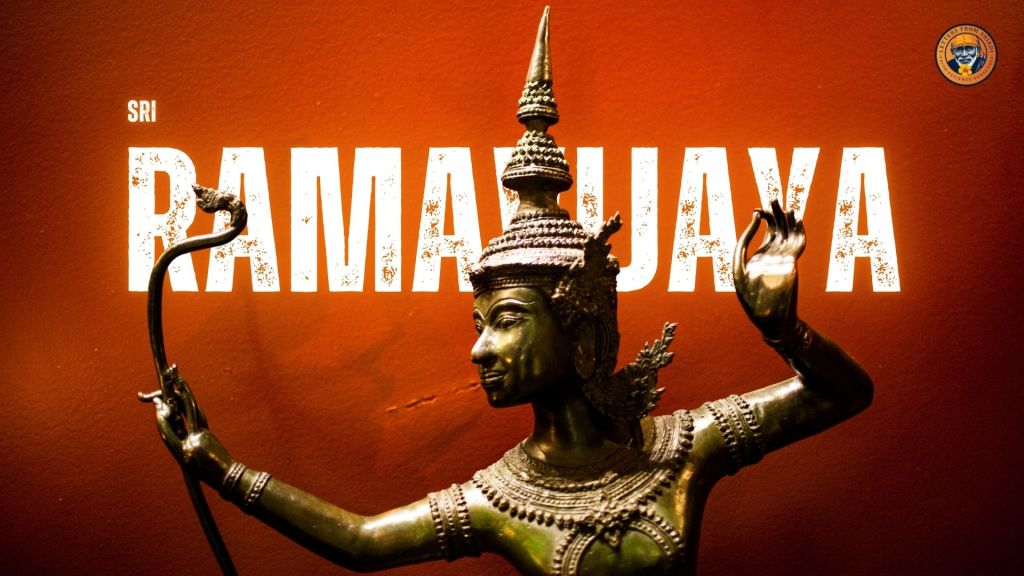
Published in Bombay in 1891 by Dubhashi & Co., this little book is a rare English retelling of the Ramayana, written in a simple, direct style so that ordinary readers of the late 19th century could enter the story of Rama, Sita, Lakshmana, Hanuman, and Ravana without the barriers of Sanskrit or courtly commentary.
It is also a book with an intimate connection to Baba. Shri Sai Baba often recommended this text to devotees. In the final moments of His human life, He had it read aloud to Him more than once. That image, of Baba sitting, listening to the story of Bhagwan Ram’s triumphs and trials is reason enough for me to take up the work of bringing it forward again.
And so, I have decided to make this book accessible here in parts, serialised as blog posts, accompanied by images to make it even more accessible. Each post will carry the original narration from the 1891 text. My intention is not to comment, interpret, or modernise, but to simply make available, to give the book breath again, so that others may read it, and perhaps keep it close as Baba would’ve wanted us to.
The Ramayana is a river of stories. Ramavijaya is one of its channels, sometimes rough, sometimes tender, always flowing towards that same sea of meaning. To walk along its banks is to hear songs of courage, grief, love, arrogance, surrender, and ultimately, dharma.
With this post, begins our journey. One chapter at a time. May these words carry to you something of what Baba cherished.
Gratitude only!
|| OM SAI SHRI SAI JAI JAI SAI ||
|| SHRI SATCHIDANANDA SADGURU SAINATH MAHARAJ KI JAI ||
Public Domain Notice: This work, Ramavijaya: The Mythological History of Rama (Bombay, 1891, Dubhashi & Co.), is in the public domain. That means it no longer belongs to any single person or publisher, it belongs to everyone. You are free to read, share, adapt, and circulate it without restriction. My effort here is only to make it more accessible through blog posts. I just want that what was once preserved in old libraries and out-of-print editions can now be experienced by all.
Also, as I read and share Sri Ramvijaya, I’ve realised that the edition that I am sharing is a popular retelling, not the Valmiki Ramayana nor the Tulsidas Ramcharitmanas, though it draws from both along with folklore, regional traditions, and devotional expansions.
Like all great epics, the Ramayana exists in many versions across India and Asia, from Sanskrit and vernacular texts to oral traditions, village tellings, and dramatic performances. Each version reflects the cultural, historical, and spiritual context of its time. The Ramavijaya is one such retelling, remarkable for its simplicity of language and its ability to weave myth, legend, and moral lessons together in a way that is accessible to common readers.
Some events in this work differ significantly from the classical Valmiki Ramayana. For example, the identity of certain demons, the roles of secondary characters, and the sequence of events often vary. Where these differences are striking, I will add a note of clarification or simply change to what’s common in popular discourse.
My purpose in sharing this text is not to replace the original Ramayana, but to present this devotional and culturally unique retelling in simple words, so that the richness of its storytelling, symbolism, and moral vision can be appreciated by a wider audience because I myself haven’t found Ramayana narrated this briefly anywhere.
This series is thus both a reading and a cultural exploration for me & I am grateful to have this opportunity.
 Letters From Shirdi