
Note: I am referring the original Marathi Ovi version of the Shri Sai Satcharita, beautifully translated by Mrs. Indira Kher. No copyright infringement is intended. These reflections and interpretations are drawn from my personal experience, devotion, and evolving understanding of Baba’s teachings and unceasing grace. I fully respect that others may hold different views or insights, and I welcome the diversity of devotion. However, I retain the creative and devotional agency to express myself freely on this blog, which is a heartfelt offering to my One and Only, Satchidananda Sadguru Sainath Maharaj of Shirdi.
With Love, Priyanka
Today, we begin the first reflection on the exquisitely titled chapter, The Descent of Shri Sai Samarth in Shirdi. The author, in keeping with the classical structure of Hindu scriptures, opens by illustrating how the Divine descends upon earth to restore balance between good and evil. This traditional frame has value in situating Baba within an eternal lineage of God-realised beings, but I personally do not resonate with the rigid bifurcations of gender, caste, varna, or āśrama that appear in these discussions. They feel misaligned with Vedanta and with Baba’s own teachings, in my view, both of which dissolve boundaries rather than reinforce them.
Perhaps these codes were originally crafted as regulatory frameworks for society, but across cultures we have witnessed their shadow side. Structure is important in society but not to the benefit of one and detriment of another. Women burnt as witches for speaking to God outside the sanctioned codes of orthodox Christianity, widows in India placed on their husband’s pyre, entire communities denied water, land, or dignity because of their caste or class, centuries of racial enslavement by Britishers and others based on their prejudices, religious terrorism, and genocides including the recent one in Kashmir which lead to a full blown war. Maybe I have not risen high enough in consciousness to call all this “forgivable” in some cosmic sense. But social cruelty does not deserve forgiveness, it deserves dissolution. We do not have to hate the players, but the game is deeply flawed.
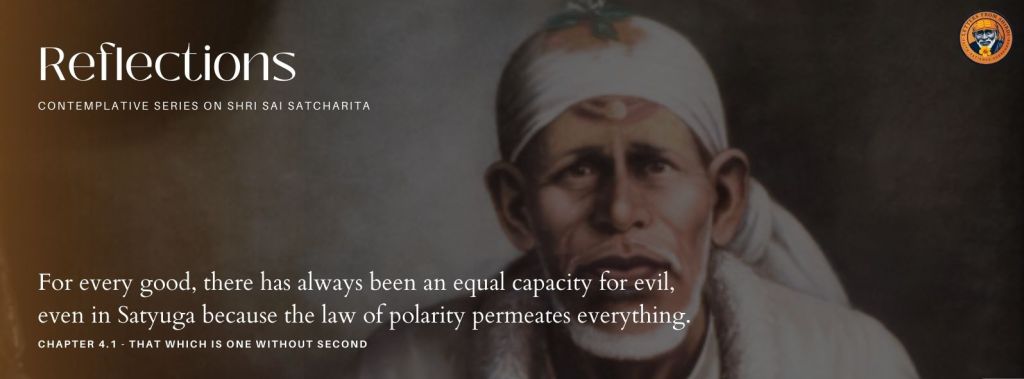
Everyone functions according to their saṁskāras, falling somewhere on the spectrum of light and dark, virtue and vice, because the law of polarity permeates everything. For every good, there has always been an equal capacity for evil, even in Satyuga. The pain is immense; the collective trauma is immense. One of my ancestors too bore the brunt of social cruelty two centuries ago, and her agony is still palpable in the maternal family field. May her soul find peace. In her honour, I refuse to accept any ideology that can harm another being, human or non-human, or takes agency of choosing what to do, be, wear or eat because, in my deepest understanding, all forms are nothing but the sport of Brahman. Both pleasure and pain arise from the same Source. The only error is forgetting the unity beneath the multiplicity.
The author, a pious, innocent, and devout Brahmin, writes with heartfelt fidelity to his understanding of dharma. He was an excellent writer and a guileless devotee deeply beloved by Baba. One of the great beauties of Sai Satcharita is precisely this – it accommodates every worldview without attacking or diminishing any. It remains vast, non-polemic, just as Baba Himself instructed. And in our earlier reflections we saw how utterly pointless argumentation is on the spiritual path.
Ultimately, it is the belief in separation that solidifies the illusion of a separate identity and keeps us rotating on the wheel of saṁsāra. In Tarot, the Wheel of Fortune symbolises cyclical change, the turning of fate, the movement of seasons and lifetimes. What goes up must come down, history repeats itself. But spiritually, I see it more as the soul’s progression with beings clinging to the spokes of the wheel, ready to bite us, distract us, or drag us back into forgetfulness. We remain trapped when we cling to our story – the “me” and “my life” – which dissolves the moment we die. We cling to belief systems, doctrines, caste, class, nation, religion, anything that bolsters the illusion of separateness and superiority. Saints hold immense compassion for all such human foolishness; they do not judge because they see the root of ignorance. I am no saint! I still judge, laugh, recoil at the absurdity of human behaviour. It is what it is.
More than restoring varnāśrama-dharma or enforcing social norms (even if ancient texts prescribe them), more than stopping the dissipating of energy in petty pleasures or policing “proper” and “improper” conduct in terms of food and clothing to begin with, the true descent of saints is something far more radical! They re-incarnate to dissolve distinctions. To alleviate suffering by embodying Brahman, the boundless, the attributeless, the indivisible Reality beyond all categories, codes, definitions, forms, doctrines, concepts, symbols, and identities. Rituals, scriptures, varnas, social roles are manifestations of sacred energy, yes, but they are not God. They are the veiling power of Māyā (āvaraṇa śakti) that hides the true nature of Brahman, and the projecting power (vikṣepa śakti) that throws up multiplicity and difference where none exist.
If caste, class, purity, birth, and outer identity were truly divine determinants, then our dearest Śrī Viṣṇu would never have incarnated for an asura-born devotee like Prahlāda, or come to save Gajendra when he didn’t pronounce His name even once until the every end of the stotra, Śrī Rāma would never have accepted the half-bitten ber of Śabari with such tenderness that it became immortal, Guru Nānak Dev ji would have chosen the feast of the wealthy merchant instead of revealing through blood-soaked and milk-soaked rotis whose offering was pure, Śrī Kṛṣṇa would never have eaten the flattened rice (poha) brought by Sudāma in torn clothes, Jesus would never have touched the leper, healed him, or defended the prostitute condemned by the crowd, and Baba would never have lived as a faqīr, eating from a broken pot, sharing food with animals, birds, beggars, criminals, widows, orphans, and every outcaste soul whom society had discarded, which also includes how I felt in my life when He entered it. I had abandonment wound so deep, as if going down multiple past lives, that nothing except His grace could heal it.
All saints, and divine incarnations descend to cut through both powers of Māyā. To dissolve tamasic inertia and awaken sattvic clarity. To restore balance where human systems have failed. And above all, to hold a mirror steady enough for us to finally recognise our own true nature, one without second, one without caste or creed, one without boundaries or bias, one that has always been Supreme Brahman alone. To remind us that this life is not random, we took birth to burn specific karmas, to learn specific lessons, and to remember again what we have forgotten, that we are that nameless, formless, timeless Supreme Being.
Thus, I would need this reflection in words of His Holiness Swami Sivananda, who writes in his essay on saints in Bliss Divine (page 420-425), “There is no caste among saints and sages. A saint is like a lion out of the cage. Free from the shackles of caste, creed, profession, tradition and scripture. Do not look to the caste of the saints. You will not be benefited. You cannot imbibe their virtues. In higher religion, there is neither the caste nor creed. Cobblers, weavers, and untouchables had become the best saints. There is no real difference between Christian mystic and a Hindu Saint. Their sayings never clash. The messages of the saints are essentially the same. They have always been a call men to discover the wisdom of the self or Atman even if they differ in their conduct, one can be Karmakandi like Sri Vasishtha, Bhogi like King Janaka or wanderer like Dattatreya.“
And not to forget, we all have the potential to be saints, we all have the seeds within. When the time is ripe and the grace flows unceasingly, it will sprout into a bountiful crop of understanding and enlightenment.
|| OM SAI SHRI SAI JAI JAI SAI ||
|| SHRI SATCHIDANANDA SADGURU SAINATH MAHARAJ KI JAI ||
Note: Since the chapters are long and stretch across many ovis, I will be breaking them down in a way that allows us to go deep without losing track. Each reflection will cover either a single concept, a leela, or at most 50 ovis – whichever completes a thought fully. This way, we can sit with every aspect of the Satcharita as carefully and reverently as possible, without skipping a single detail, guided always by Baba’s grace. I’ve also chosen this approach because very long posts can feel heavy or overwhelming for some devotees. Keeping them snack-able and focused will hopefully make it easier for everyone to read, return to, and reflect on in their own pace. All rights reserved.
 Letters From Shirdi
Leave a comment